Investment Casting vs. Sand Casting: A Buyer's Guide
How investment (lost-wax) and sand casting work, compared on tolerance, finish, complexity, size, cost, and lead time, plus how to choose.

For engineers and procurement teams sourcing metal components, the choice of casting process shapes everything downstream: the achievable tolerances, the cost per part, the tooling investment, and how quickly parts reach the production line. Two processes dominate the conversation: investment casting (also called lost-wax casting) and sand casting. Both have been refined over decades and both produce sound, load-bearing parts across industries from aerospace and energy to agriculture and general machinery. Yet they are suited to very different combinations of geometry, volume, and finish requirements.
This guide explains how each process works, compares them across the criteria buyers actually weigh during sourcing, and offers a practical framework for choosing between them. The goal is to help you specify the right process before a quote is even requested, avoiding the costly mid-project pivots that come from mismatching a part to its manufacturing route.
How Investment Casting Works
Investment casting takes its alternative name, lost-wax casting, from its defining step: a wax pattern is consumed during the process. The sequence is methodical and the precision compounds at each stage.
- Pattern creation. Molten wax is injected into a precision metal die to form an exact replica of the final part, including fine details and internal features.
- Assembly. Individual wax patterns are attached to a central wax sprue, forming a cluster often called a "tree." This lets many parts be cast in a single pour.
- Shell building. The tree is repeatedly dipped into a ceramic slurry and coated with fine refractory sand (stucco). After several layers dry, a hard ceramic shell forms around the wax.
- Dewaxing. The shell is heated, typically in an autoclave or flash-fire furnace, melting and draining the wax. This leaves a hollow ceramic mold, the precise negative of the part.
- Pouring. The preheated shell is filled with molten metal, which solidifies inside the cavity.
- Knockout and finishing. The ceramic shell is broken away, parts are cut from the sprue, and gates are ground and finished.
Because the wax pattern is melted out rather than pulled from a mold, investment casting has no parting line in the traditional sense and can reproduce highly intricate geometry. The ceramic shell also captures surface detail extremely well, which is why investment-cast parts emerge close to net shape with minimal machining stock.
How Sand Casting Works
Sand casting is the oldest and most widely used metal casting method, valued for its flexibility and low barrier to entry. Rather than a consumable wax pattern, it uses a reusable pattern to form a mold in compacted sand.
- Pattern and mold. A pattern of the part, usually wood, metal, or plastic, is placed in a two-part molding box (the cope and drag). Sand mixed with a binder is packed around it.
- Pattern removal. The mold halves are separated and the pattern is removed, leaving a cavity in the shape of the part.
- Core placement. If the part has internal passages, sand cores are set into the cavity to form those hollow features.
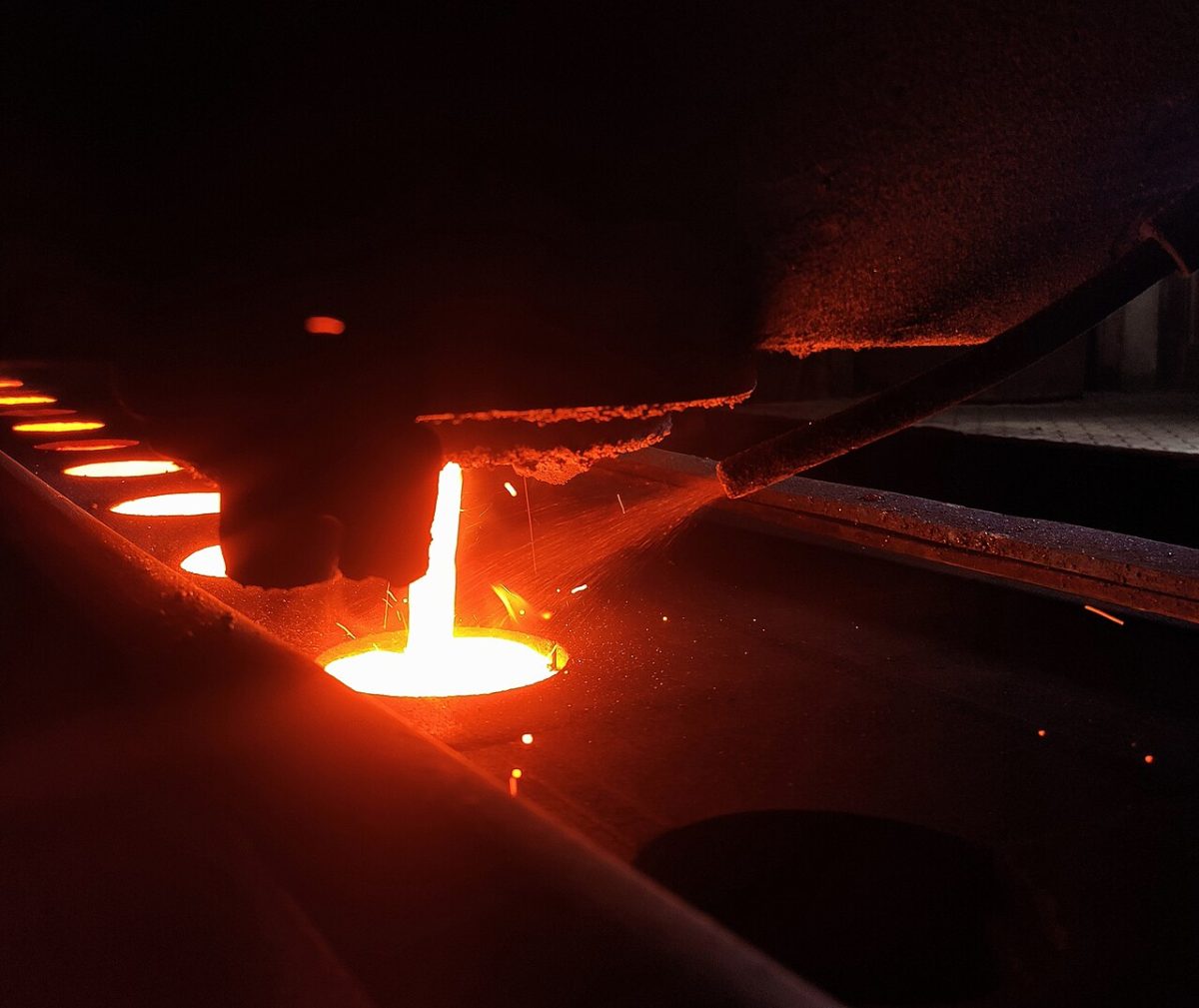
- Pouring. The mold is reassembled and molten metal is poured through a gating system into the cavity.
- Shakeout. Once solidified, the sand mold is broken apart to release the casting. The sand is typically reclaimed and reused.
- Cleaning and machining. Gates and risers are removed, surfaces are cleaned, and critical features are machined to final dimensions.
Because the sand mold is destroyed each cycle but the pattern is reused, sand casting keeps tooling cost low while remaining viable for both one-off prototypes and large production runs. The trade-off is a coarser surface and looser tolerances, as the grain of the sand and the parting line are reproduced on the part.
Head-to-Head Comparison
The table below summarizes the practical differences buyers care about most. Treat the figures as typical industry ranges; actual results depend on alloy, part geometry, foundry capability, and the specifics of your drawing.
| Criterion | Investment Casting | Sand Casting |
|---|---|---|
| Dimensional tolerance | Tight; typically around ±0.1 to ±0.25 mm on small features | Looser; commonly ±0.5 to ±1.5 mm or more, scaling with size |
| Surface finish | Smooth, roughly 1.6 to 3.2 µm Ra as-cast | Rougher, roughly 6.3 to 25 µm Ra as-cast |
| Geometric complexity | Excellent; thin walls, fine detail, near-net intricate shapes | Moderate; draft angles and simpler forms required |
| Practical part size | Small to medium, typically grams up to tens of kilograms | Small to very large, from kilograms to many tonnes |
| Material options | Very broad; carbon and stainless steels, superalloys, aluminum, bronze, and more | Very broad; cast iron, steels, aluminum, bronze, and more |
| Tooling cost | Higher; requires a precision wax-injection die | Lower; pattern can be wood or plastic |
| Volume economics | Best for medium-to-high volumes that amortize die cost | Economical from single prototypes to high volume |
| Typical lead time | Longer initial setup due to shell-building cycle | Faster to first part, especially for prototypes |
| Machining required | Minimal; often near-net shape | More; greater stock allowance on critical surfaces |
Dimensional Tolerance and Surface Finish
This is where the two processes diverge most sharply. Investment casting's ceramic shell holds fine detail and produces a smooth, near-net surface, reducing or eliminating secondary machining on many features. Sand casting inherently reproduces the sand grain and parting line, so as-cast surfaces are coarser and tolerances wider. When a print calls for tight tolerances or a fine cosmetic finish, investment casting usually wins; when the part will be fully machined afterward anyway, the rougher sand-cast surface may not matter.
Geometric Complexity and Wall Thickness
Investment casting excels at intricate shapes, thin walls, and undercuts that would be difficult or impossible to extract from a sand mold without complex coring. Turbine blades, pump impellers, and detailed brackets are classic examples. Sand casting handles complex internal passages too, but typically relies on multiple cores and requires generous draft angles, making it better suited to chunkier, less detailed geometry.
Part Size and Weight
Sand casting scales up dramatically. Engine blocks, large housings, and heavy industrial components weighing hundreds of kilograms or more are routinely sand cast. Investment casting is generally reserved for smaller parts, since building and handling a ceramic shell becomes impractical and costly as size grows. If your part is large and heavy, sand casting is often the only economical route.
Tooling Cost and Volume Economics
The economics hinge on tooling. A precision wax-injection die for investment casting is a meaningful upfront investment, so the per-part cost only becomes attractive once that cost is spread across enough units. Sand casting patterns are inexpensive and can be made quickly, which is why sand casting is the default for prototypes, low volumes, and very large parts where die tooling would never pay back. For medium-to-high volumes of small, detailed parts, investment casting's lower finishing and machining costs frequently make it the cheaper choice overall, even with the higher tooling.
Lead Time
For a first article, sand casting is usually faster because the pattern can be produced quickly and the mold made in hours. Investment casting carries a longer setup because the multi-layer ceramic shell must be built and cured before pouring. Once tooling exists and production is running, however, both processes deliver predictable repeat lead times.
Choosing Between Them
No single process is universally better. The right answer depends on how your part scores against a handful of decisive questions. Use the guidance below as a starting filter.
Lean toward investment casting when:
- The part is small to medium and geometrically complex, with thin walls or fine detail.
- Tight tolerances and a smooth as-cast finish are required, and you want to minimize machining.
- Volumes are high enough to amortize the wax-injection die.
- The material is a high-performance alloy where near-net shape avoids costly machining of hard metals.
Lean toward sand casting when:
- The part is large or heavy, beyond the practical reach of a ceramic shell.
- Geometry is relatively simple, or the part will be fully machined regardless.
- Volumes are low, or you need rapid, inexpensive prototypes before committing to hard tooling.
- Material is cast iron or another alloy commonly poured in sand, and budget for tooling is constrained.
A useful rule of thumb: let finish and complexity argue for investment casting, and let size and tooling budget argue for sand casting. When a part sits in the middle, weigh the total cost of ownership rather than the casting quote alone. A higher investment-casting price can still be the lower-cost path once reduced machining, scrap, and assembly labor are counted. Conversely, a part that needs heavy post-machining anyway gains little from investment casting's fine finish.
Don't Forget the Downstream Steps
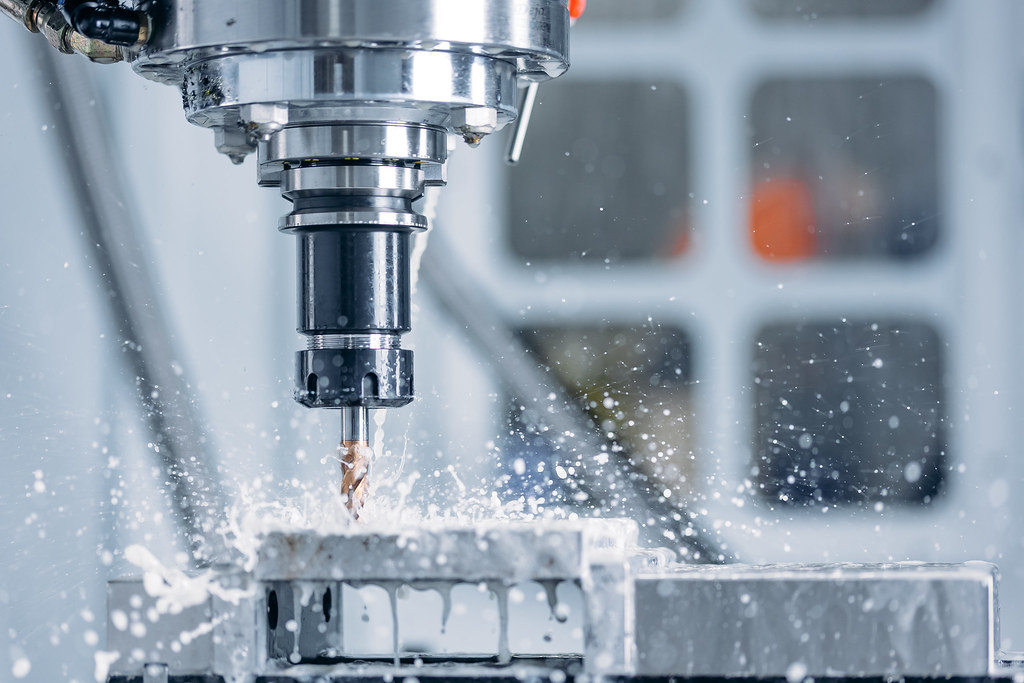
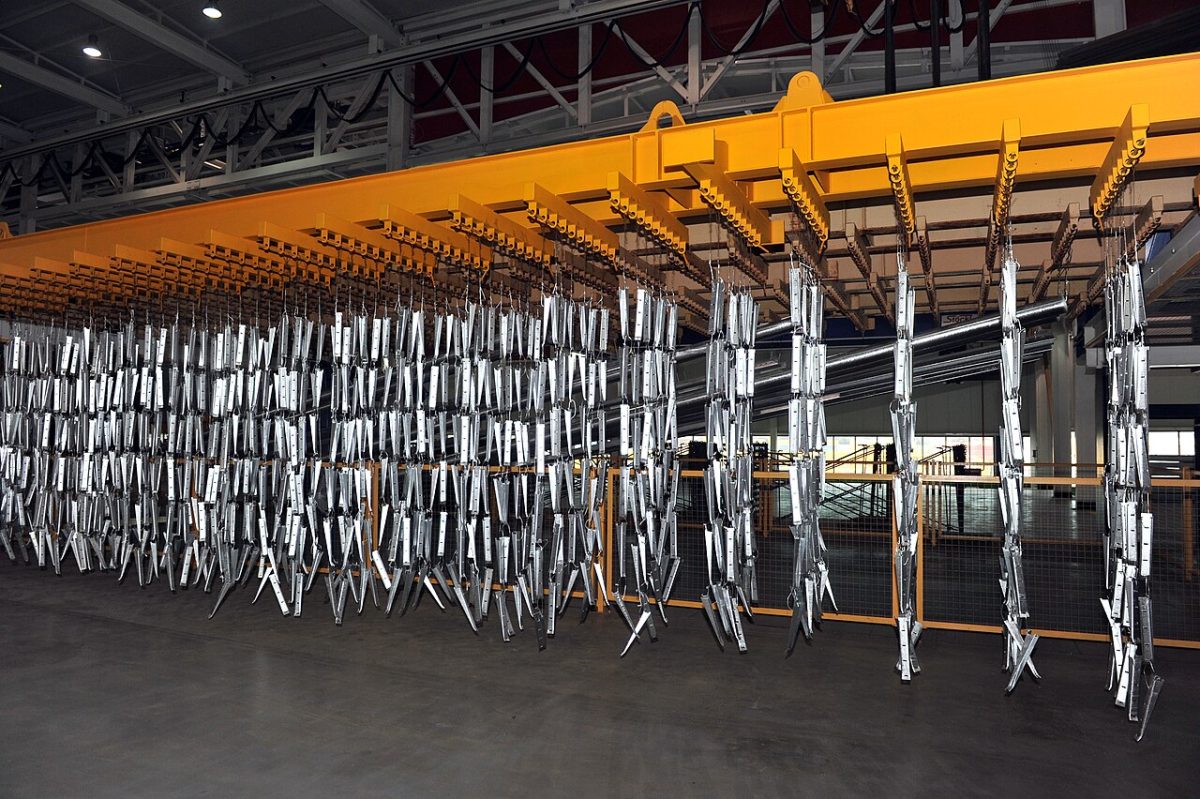
Casting is rarely the final operation. Both processes feed into CNC machining for critical features, heat treatment for mechanical properties, and surface treatment such as plating, anodizing, or coating for corrosion resistance and appearance. Considering these steps early often changes the calculus. A near-net investment casting that needs only a few machined datums can beat a cheaper sand casting that requires extensive milling, while a large sand casting with one critical bore may be perfectly economical. The best sourcing decisions evaluate the whole route from raw casting to finished, inspected part.
Working With a Capable Supplier
Process selection is most reliable when made in dialogue with a manufacturer that runs both routes and can model the full production chain. At MechPart Pro, an ISO 9001 certified precision manufacturer based in Shanghai, casting sits alongside CNC machining, forging, sheet metal fabrication, injection molding, additive manufacturing, and surface treatment, with parts shipping to customers in more than 40 countries. That breadth means a part can be evaluated holistically: which casting process fits the geometry and volume, and how machining, heat treatment, and finishing combine to meet the print at the lowest total cost.
If you are deciding between investment and sand casting for a specific component, sharing your drawing, target volume, material, and tolerance requirements early lets an engineering team confirm the optimal route before tooling is committed. A short design-for-manufacturing review at the quoting stage is the simplest way to avoid surprises later in the program.
Investment casting and sand casting are not competitors so much as complementary tools. Understanding how each works, and where each excels, turns process selection from guesswork into a deliberate, defensible engineering decision, one that pays back in cost, quality, and schedule across the life of the part.
Related capabilities
Have a part to make?
Upload your CAD for a detailed quote and free DFM feedback within 24 hours.