Die Casting vs. Sand Casting: How to Choose
Tooling cost, volume, part size, tolerances, surface finish and alloys — the practical differences that decide whether your part should be die cast or sand cast.

Die casting and sand casting both pour metal into a mold, but almost everything else about them — cost structure, volume, precision, and the metals they suit — is different. Choosing wrong can double your unit cost or leave you tooling for volumes you will never reach. Here is how to pick.
The core difference: the mold
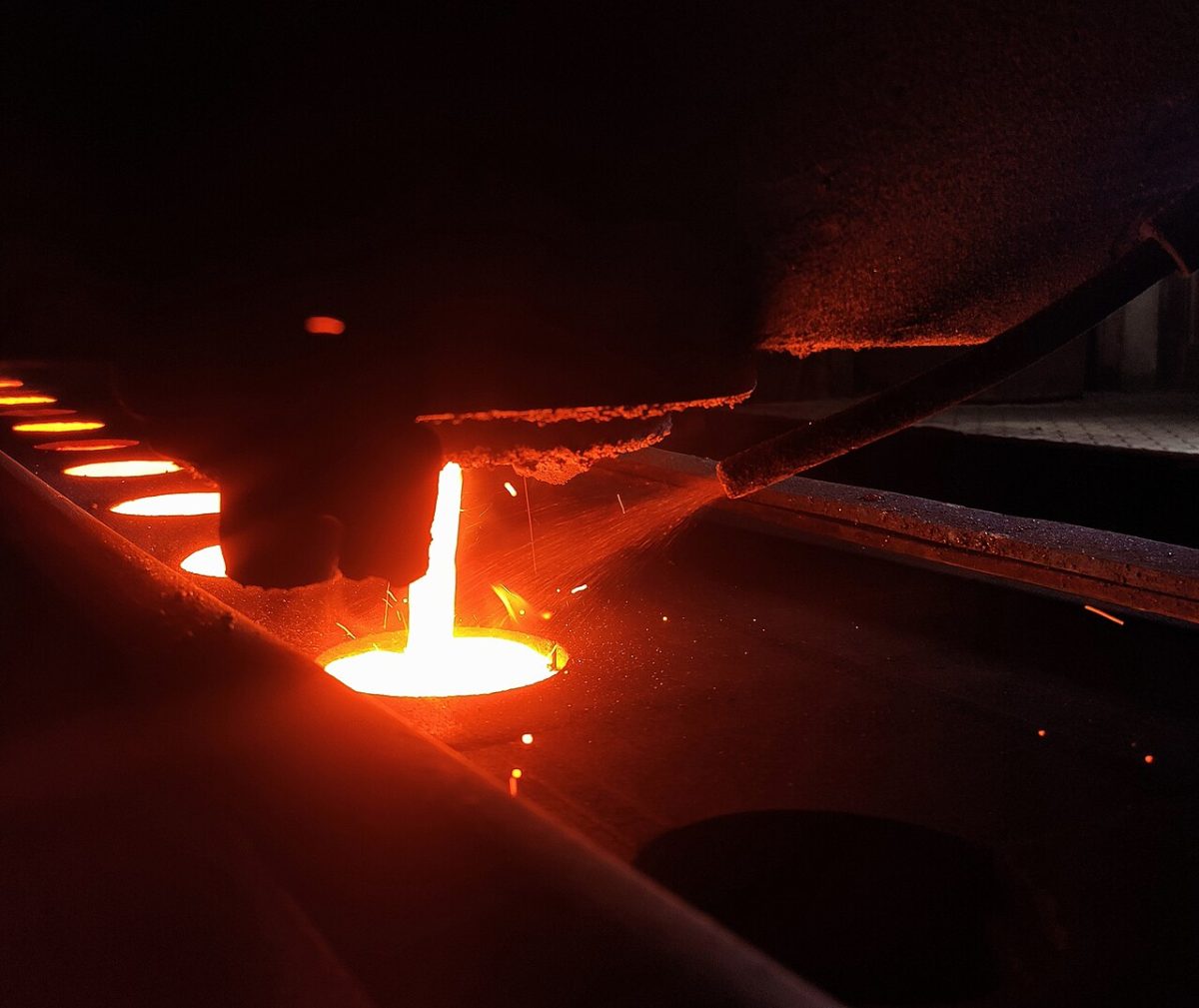
In die casting, molten metal is forced under high pressure into a hardened steel mold (the die) that is reused for hundreds of thousands of shots. In sand casting, each part is poured into a mold packed from sand around a pattern, and the mold is broken away to release the casting — a fresh mold every time.
That single difference drives the whole decision.
Tooling cost and volume
- Die casting: the steel die is expensive — often tens of thousands of dollars — but each part after that is cheap and fast. It only makes sense at high volume (typically thousands to millions of parts).
- Sand casting: the pattern is cheap and quick to make, so up-front cost is low, but each casting takes more labor. It wins at low to medium volume and for large parts.
The crossover is all about quantity. If you are unsure your volume justifies hard tooling, ask who carries the risk — our guide to mold and die ownership is worth reading first.
Part size
Die casting suits small to medium parts — housings, brackets, connectors. Sand casting scales up to very large castings — engine blocks, pump bodies, machine bases weighing hundreds of kilograms — that no die-casting machine could produce.
Tolerances and surface finish
- Die casting gives tight tolerances and smooth as-cast surfaces, often needing little or no machining.
- Sand casting is rougher and looser, with a grainy surface and wider tolerances, so critical features usually get machined afterward.
Alloys
Die casting is limited to lower-melting non-ferrous metals — mainly aluminum, zinc and magnesium — because steel dies cannot survive molten steel or iron. Sand casting handles almost anything, including cast iron and steel, which is a major reason it survives for heavy industrial work.
Watch for defects either way
Both processes share failure modes — porosity, shrinkage, cold shuts — that come from how the metal fills and solidifies. Knowing them helps you design pour-friendly parts and read inspection reports. See casting defects explained.
Quick decision guide
- High volume, small aluminum/zinc part, tight tolerance: die casting.
- Low/medium volume, large part, or cast iron/steel: sand casting.
- Best strength for the weight, not just a cast shape: consider forging instead.
- Smooth surface and fine detail at moderate volume: compare investment vs. sand casting.
Send your part model and target volume for a casting quote and we will tell you which process actually fits.
Related capabilities
Have a part to make?
Upload your CAD for a detailed quote and free DFM feedback within 24 hours.