The Complete Guide to CNC Machining for Precision Parts
What CNC machining is, how milling and turning differ, the tolerances and finishes you can expect, which materials run well, and the design choices that drive cost.

CNC machining is the workhorse of precision manufacturing. If a part has to hold a real tolerance, take a load, or mate cleanly with something else, it usually gets machined at some point. This guide walks through what the process actually is, where it fits, and the handful of decisions that decide whether your parts come out cheap and on time — or expensive and late.
What CNC machining actually is
CNC (Computer Numerical Control) machining is a subtractive process: you start with a solid block or bar of material and cut material away until the part is left. A CAD model becomes toolpaths, the machine follows them, and a rough billet becomes a finished component. Because the geometry lives in software, the same program makes part number two identical to part number two thousand. That repeatability is the whole point.
The two core processes: milling and turning
Almost everything comes down to two families of machine.
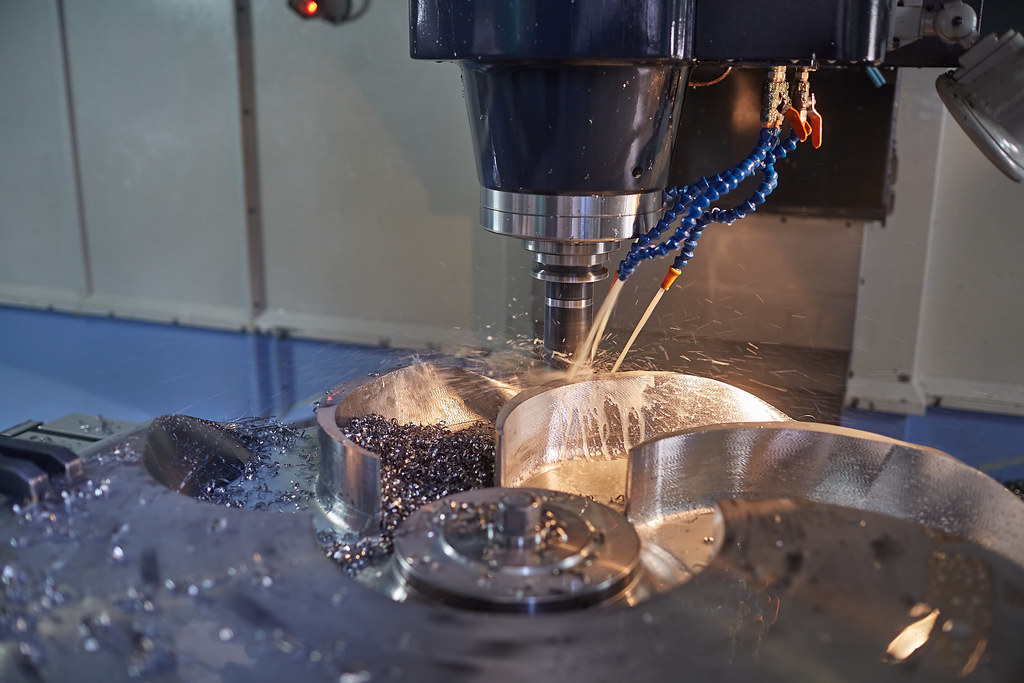
- Milling — the workpiece is held still and a rotating cutter removes material. Best for prismatic (block-like) parts, pockets, faces, and complex 3D surfaces.
- Turning — the workpiece spins and a stationary tool cuts it. Best for round parts: shafts, pins, bushings, threaded studs.
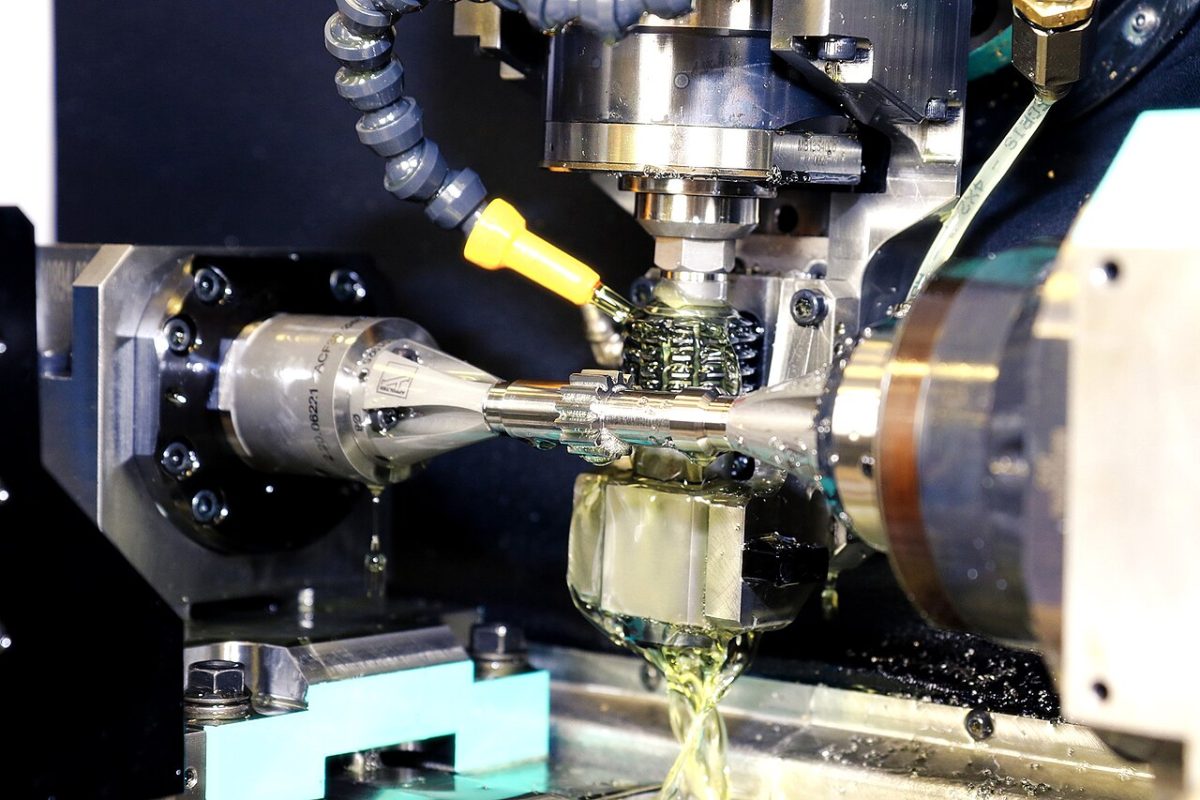
Many parts need both, and modern mill-turn centers combine them. If you are not sure which your part suits, our breakdown of CNC turning vs. milling covers it in detail. For tall, prismatic geometry with features on five faces, 5-axis machining cuts setups and holds tighter relationships between features.
Tolerances you can expect
A standard machined tolerance is roughly ±0.005" (±0.125 mm). Skilled shops routinely hold ±0.001" (±0.025 mm) on the right features, and tighter with grinding or precision processes. But tolerance is not free: every band tighter than default adds inspection, scrap risk, and slower cutting. The trick is tightening only the features that need it. See understanding CNC tolerances and the cost of over-tolerancing, and use GD&T to control what actually matters.
Materials that machine well
Machinability varies enormously between metals and plastics.
- Aluminum (especially 6061 and 7075) cuts fast and cheap — the default for most prototypes and light structural parts.
- Stainless steel (303, 304, 316, 17-4) for corrosion resistance and strength, at slower cutting speeds.
- Titanium for strength-to-weight and biocompatibility — strong but demanding to machine.
- Engineering plastics like PEEK, Delrin and nylon — see machining plastics.
Our full materials guide compares them side by side.
Surface finish
As-machined parts carry visible tool marks — typically around 3.2 µm Ra (125 µin). Bead blasting, anodizing, and other surface finishes improve appearance and corrosion resistance. If a specific roughness matters for sealing or sliding, specify it explicitly — see Ra and Rz explained.
What drives the price
Machining cost is mostly machine time plus setups plus material. The biggest levers you control are:
- Removed volume — deep pockets and thin walls take time. Design closer to the finished shape.
- Setups — every time the part is re-clamped, cost and error creep in. Workholding matters more than people think.
- Tight tolerances and fine finishes — apply them selectively.
- Tiny internal corners — they force small, slow tools.
We break the levers down in 12 ways to reduce machining cost and design for CNC machining.
When to choose CNC — and when not to
CNC wins for precision, strength, and low-to-mid volumes where tooling for casting or molding cannot be justified. For very high volumes of a stable design, casting or injection molding usually beat it on unit cost. For one or two quick concept parts, 3D printing may be faster. Choosing between them is its own topic — see how to choose a manufacturing process.
Have a model ready? Send it over for a machining quote, or see the full range on our capabilities page.
Related capabilities

Have a part to make?
Upload your CAD for a detailed quote and free DFM feedback within 24 hours.